The FLARE Guide to Windows Internals and Advanced Reversing // Josh Stroschein, Jae Young Kim
Virtual | March 23-27 | 32 Hours
BOOK NOW📅 Lectures on March 23, 24, 25, 26, 27
❗️Please check the detailed schedule for your time zone.
ABSTRACT
Developed by the FLARE team at Google Cloud Security, this immersive virtual training provides a comprehensive deep dive into the complex world of modern Windows malware. Drawing on years of frontline reverse engineering experience, the course moves beyond basic reverse engineering to target the sophisticated techniques adversaries use to evade detection. You will gain mastery of low-level Windows internals and advanced tradecraft by dissecting challenging samples that mirror real-world threats.
You will build hands-on expertise in key areas, replacing legacy workflows with Time Travel Debugging (TTD) to record and query execution traces. The curriculum covers the full spectrum of modern threats: analyzing multi-stage shellcode, defeating anti-disassembly and anti-debugging tricks, and dissecting EDR bypass techniques like process injection and indirect system calls. You will also deconstruct ransomware cryptography and master the complex art of reversing C++ and .NET binaries.
By the end of this course, you will possess a powerful toolkit for deconstructing malicious software. You will be able to defeat advanced obfuscation, reconstruct complex code flows, and extract critical intelligence using both manual and automated techniques.
INTENDED AUDIENCE
This is an ideal course for security analysts, malware analysts/researchers and blue teams/defenders that need to get hands-on diving deep into malicious software to create and update detections.
KEY LEARNING OBJECTIVES
-
Mastering Cutting-Edge Evasion & Anti-Analysis: You'll not only understand how malware hides, but you'll master evasive process injection techniques and understand how indirect syscalls are used to bypass EDR, defeat modern anti-debugging tricks, and reconstruct multi-stage shellcode to uncover hidden payloads. You’ll gain a significant advantage in analyzing malware designed to resist detection and analysis.
-
Advanced Analysis with Specialized Tools & Techniques: You'll go beyond conventional reversing to tackle the hardest challenges in malware analysis. The course provides hands-on expertise with Time Travel Debugging (TTD) for efficient behavioral analysis, teaches you to reconstruct C++ and .NET binaries, and shows you how to dissect ransomware cryptography to extract critical information.
-
Building Custom Tools for Automated Analysis: This training isn't just about manual analysis; it's about efficiency and scale. You'll learn to automate complex tasks by leveraging C# scripting for .NET analysis and JavaScript extensions for TTD. This skill enables you to build your own custom tools to automatically defeat obfuscation and extract key intelligence, turning you into a more effective and productive analyst.
COURSE OUTLINE
Session 1
Class Introductions
- Introduce Instructors
- Course overview and Logistics
Unraveling Shellcode
- Analyzing Position Independence in Shellcode
- Defeating Code Decryption and Obfuscation
- Tracing and Reconstructing Runtime Linking with the Process Environment Block (PEB) and PE File Export Directory
- Unraveling Hashes to Determine Imports
LAB Reverse Engineering Multi-Stage Shellcode
- Defeat Code Decryption
- Reconstruct API Calls from Hashes
- Determine Final Payload Capabilities
Mitigating Anti-Analysis Techniques
- Understand Recursive Descent and Linear Sweep Algorithms
- Recognizing How Malware Uses Timing Checks, Exception Handling, Memory Scanning and TLS Callbacks for Anti-Debugging
- Fixing Control Flow With Manual Patching to Overcome Opaque Predicates and Other Anti-Disassembly Techniques
LAB Defeating Anti-Analysis
- Bypass Anti-Debugging and Anti-Analysis Techniques
- Reconstruct Code to Defeat Control Flow Obfuscation
Session 2
Leveraging Time Travel Debugging (TTD) for Malware Analysis
- Understanding Key TTD Components and Capturing Traces
- Analyzing Malware with the Debugger Object Model and LINQ
- Automating TTD Analysis with JavaScript Extensions
- Practical TTD: Techniques for Effectively Triaging Trace Files
LAB Harnessing TTD to Unravel Malware Obfuscation
- Identifying Payloads from Process Hollowing in .NET Binaries
- Automating Shellcode Downloader Analysis Through Scripting
Session 3
Advanced Evasion and Stealth Techniques
- Investigating Process-Based Evasion
- Understanding Asynchronous Procedure Calls and Early Bird Injection Techniques
- Mastering System Calls in Windows and Avoiding Version Pinning
- Uncovering and Function Hook Evasion
LAB Unraveling Advanced Evasive Malware
- Reverse Engineering and Reconstructing Process Injection
- Analyzing Indirect System Call Evasion
Session 4
LAB Dissecting Ransomware Cryptography
- Understanding Hybrid Cryptography: Symmetric and Asymmetric Encryption Models
- Analyzing Cryptographic Algorithms and Libraries in Binaries
- Case Studies: Deciphering the Cryptographic Implementations of Conti v2 and Babuk
- Extracting Keys and Other Cryptographic Artifacts from Ransomware Binaries
LAB Reverse Engineering Ransomware Encryption
- Analyze and Reverse Engineer the Encryption Scheme
- Extract Key Material from a Ransomware Sample
Session 5
Reverse Engineering Modern C++ Binaries
- Deconstruct C++ object-oriented principles
- Perform virtual function table (VFT) analysis
- Identify the use of the Standard Template Library (STL)
LAB Reconstructing a Modular C++ Backdoor
- Identify and reconstruct C++ classes
- Analyze class inheritance and polymorphism
- Trace virtual function dispatch and program flow
Session 6
Deobfuscating .NET Malware
- Understanding the .NET Framework and Common Malware Tactics
- Deconstructing Obfuscated .NET Binaries
- Reversing and Unpacking Multi-Assembly Malware
- Automating Analysis with .NET Reflection and C# Scripting
LAB Defeating Protected .NET Malware
- Defeating Control Flow Obfuscation and Unpacking a .NET Dropper
- Analyzing Encrypted Payloads and Defeating Obfuscation
- Automating String and Payload Decryption via C# Scripting
Knowledge Prerequisites
x86/x64 assembly: Students must be comfortable reading and debugging assembly.
Scripting proficiency (Python/JS): Some labs utilize scripting to augment analysis. Students must be able to write/debug Python (for Triton) and read JavaScript (for WinDbg). (Note: To ensure the class moves efficiently, we provide robust scaffolding/templates. Students focus on the logic, not boilerplate code.)
Familiarity with a disassembler (IDA Pro/Ghidra/Binary Ninja) and standard Windows internals (PE structure, Win32 API) is assumed.
System Requirements
A laptop with at least 6 GBs RAM, 50 GB free hard disk space and the ability to run VirtualBox virtualization software. Newer M1, M2, and M3 Macs will not be directly supported due to limitations in virtualization technology available. An alternative cloud-based VM can be provided on-demand.
Students will be provided with
Students will be provided with all course materials - slides, demo files, lab files and detailed lab solutions. Students will also be provided with a custom VM that can be used to complete all course exercises.
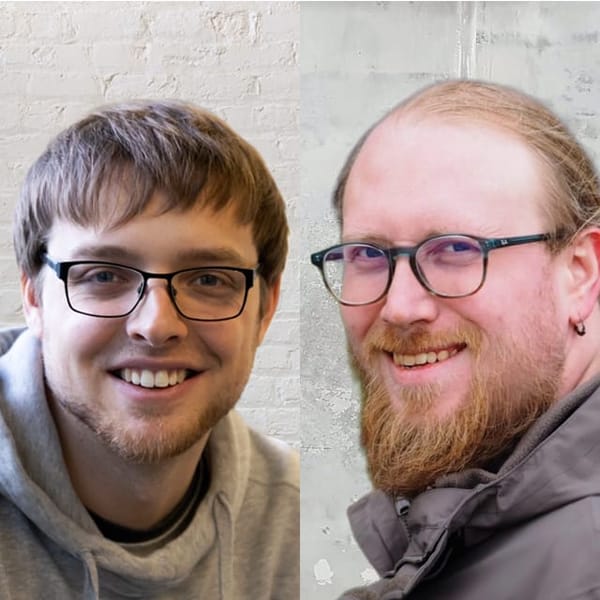
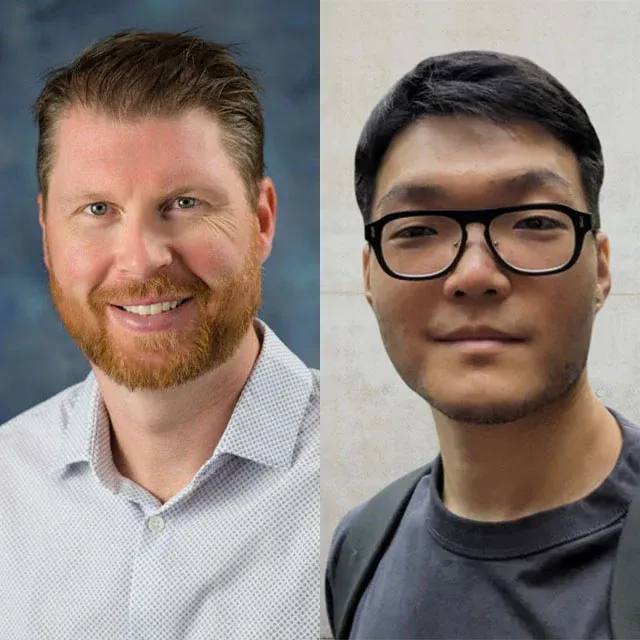
YOUR INSTRUCTORS: Josh Stroschein and Jae Young Kim
Josh is an experienced malware analyst and reverse engineer and has a passion for sharing his knowledge with others. Josh is a reverse engineer with the FLARE team at Google Cloud (Mandiant), where he focuses on tackling the latest threats. He holds a Doctor of Science from Dakota State University. Josh is an accomplished trainer and regular speaker at places such as Ring Zero, BlackHat, Defcon, Toorcon, Hack-In-The-Box, Suricon, and other public and private venues. Josh is also an author on Pluralsight, where he publishes content around malware analysis, reverse engineering, and other security related topics.
Jae Young Kim is a Senior Reverse Engineer on Mandiant's FLARE Team where he reverses malware and contributes to FLARE's automated analysis and binary similarity efforts. He is a seasoned instructor and a core contributor to FLARE’s educational content development efforts. He has a Bachelors in Computer Science from Columbia University.
 Ringzer0
Virtual Training Schedule
| March 23 | Monday | Live Lecture (4h) |
| March 24 | Tuesday | Live Lecture (4h) |
| March 25 | Wednesday | Live Lecture (2h) |
| March 26 | Thursday | Live Lecture (4h) |
| March 27 | Friday | Live Lecture (4h) |
4h Lecture Timings
| 8 am - 12 pm | US Pacific Time |
| 11 am - 3 pm | US Eastern Time |
| UK | |
| Europe |
2h Lecture Timings
| 8 am - 10 am | US Pacific Time |
| US Eastern Time | |
| UK | |
| Europe |
Labs and Discord Channel
24 x 7 throughout the class, and beyond!
Cancellations are not permitted but attendee changes can be accommodated anytime prior to the start of the course.
Note: In the event of a class cancellation, Ringzer0 will endeavor to offer transfer to another training at no additional charge.